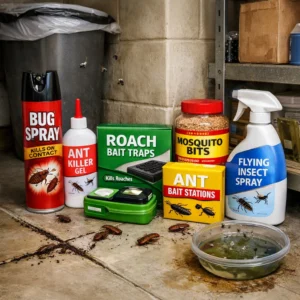
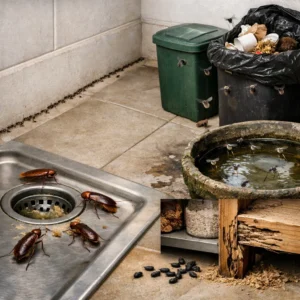
Pest prevention spray is often the first solution people reach for when they want to stop insects before an infestation starts. Used correctly, it can be an effective preventive layer that reduces pest activity around homes and buildings. Used incorrectly, however, it can fail completely, cause pests to relocate instead of disappear, or create unnecessary safety risks for people and pets. Understanding how pest prevention spray works, when to apply it, and where most people make mistakes is essential if you want real results.
This guide explains safety considerations for pest prevention spray, the differences between indoor and outdoor products, how to protect children and pets, how to apply sprays using a strategic perimeter approach, when to spray during different seasons, how often to reapply based on weather, and how to choose the right spray type. It also addresses common frustrations through problem-and-solution explanations so you can understand why a spray may not be working and what to do instead.
Table of Contents
ToggleUnderstanding safety before using pest prevention spray
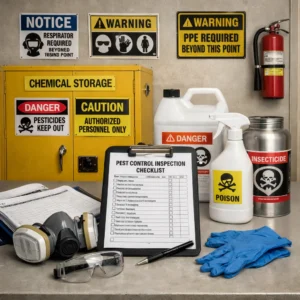
Safety should always be the first consideration when using any pest prevention spray. Many products are designed to kill or repel insects, which means they can also affect humans and animals if used improperly.
Key safety principles apply to all pest prevention spray use:
- Always read the product label and instructions fully
- Never mix different sprays or chemicals together
- Use only the recommended amount
- Allow proper drying time before re-entry
- Store products away from children and pets
Even sprays labeled as low-toxicity should be treated with care, especially in enclosed spaces.
Indoor vs outdoor pest prevention spray
One of the most common mistakes is using the wrong type of pest prevention spray in the wrong area. Indoor and outdoor sprays are formulated differently and serve different purposes.
Indoor pest prevention spray
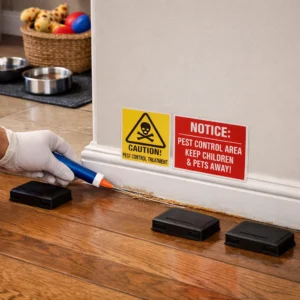
Indoor sprays are designed for controlled environments. They usually have lower odor, lower volatility, and are formulated to be used on baseboards, cracks, crevices, and hidden areas where insects travel.
Indoor sprays are best used for:
- Baseboards and wall-floor junctions
- Under sinks and behind appliances
- Inside cabinets and storage areas
- Around door frames and window frames
Indoor pest prevention spray should never be applied to food surfaces, toys, bedding, or areas where children and pets frequently touch.
Outdoor pest prevention spray
Outdoor sprays are formulated to withstand weather exposure. They often contain ingredients designed to last longer under sunlight, rain, and temperature changes.
Outdoor sprays are intended for:
- Exterior walls and foundations
- Soil and ground near entry points
- Garden borders and fence lines
- Trash areas and outdoor drains
Using outdoor pest prevention spray indoors can be dangerous due to stronger formulations and lingering residues.
Pet and child safety when using pest prevention spray
Homes with children and pets require extra care. Even products labeled as pet-safe or child-safe are only safe when used exactly as directed.
Important safety guidelines include:
- Remove pets and children from the area before spraying
- Do not allow contact until the spray is fully dry
- Ventilate indoor areas after application
- Avoid spraying pet bedding, toys, or food bowls
- Wash hands and exposed skin after application
Drying time varies by product but commonly ranges from 30 minutes to several hours. Drying does not mean “almost dry” but fully dry to the touch.
Non-toxic and essential oil-based alternatives
For households concerned about chemical exposure, non-toxic or essential oil-based pest prevention spray options are available. These typically use ingredients such as peppermint, clove, cedarwood, citronella, or eucalyptus.
Natural sprays are best used for:
- Light preventive control
- Repelling rather than killing insects
- Indoor use where chemical sensitivity is a concern
It is important to understand that natural sprays usually have shorter residual effects and require more frequent reapplication.
The Strategic Perimeter technique for effective spraying
One of the most effective ways to use pest prevention spray is the Strategic Perimeter technique. This method focuses on stopping pests before they enter the building instead of reacting after they are inside.
The 3-foot rule explained
The 3-foot rule means applying pest prevention spray in a continuous band:
- Three feet up the exterior wall
- Three feet out onto the ground
This creates a barrier that most crawling insects must cross, increasing the chance they are repelled or eliminated before entry.
Exterior wall application
When spraying exterior walls, focus on areas where insects naturally travel:
- Foundation edges
- Wall cracks and expansion joints
- Areas near vegetation touching the wall
Ground and soil treatment
Spraying the ground near the foundation is just as important as spraying the wall. Soil and mulch often harbor insects that later move indoors.
Commonly missed entry points that reduce effectiveness
Many people apply pest prevention spray but still see insects because they miss critical entry points.
Frequently overlooked areas include:
- Weep holes in brick walls
- Pipe and cable penetrations
- Door sweeps and thresholds
- Window tracks and frames
- AC line entry points
Spraying these areas carefully and consistently often makes the difference between success and failure.
Seasonality and the best times to apply pest prevention spray
Pests behave differently depending on the season, and timing your pest prevention spray improves results significantly.
Spring awakening
Spring is one of the most important times to apply pest prevention spray. Insects become active as temperatures rise and begin searching for food and shelter.
Spring spraying helps:
- Interrupt early nesting activity
- Reduce population buildup
- Protect entry points before peak season
Summer maintenance
During summer, pest activity is at its highest. Outdoor sprays may degrade faster due to heat and UV exposure.
Reapplication is often needed every 30 to 60 days, especially after heavy rain or irrigation.
Fall preparation
In cooler regions, fall spraying targets pests looking for warmth indoors. This is another critical time for perimeter treatments.
First frost considerations
In climates with frost, spraying just before the first frost can reduce overwintering pests. While frost is not relevant everywhere, the principle of timing before environmental change still applies.
Re-application schedules based on weather
No pest prevention spray lasts forever. Weather plays a major role in how long a spray remains effective.
General reapplication guidelines:
- After heavy rain: reapply outdoor spray
- High heat and sun exposure: shorten reapplication interval
- Low rainfall and mild weather: longer residual effect
Always follow the product’s specific reapplication instructions.
Comparison of pest prevention spray types
| Spray Type | Best Use | Longevity | Pros | Cons |
|---|---|---|---|---|
| Liquid Spray | Perimeter and crack treatment | 30–90 days | Even coverage, longer residual | Requires proper equipment |
| Aerosol Spray | Spot treatment | Short-term | Easy to use | Limited coverage, quick fade |
| Natural Spray | Indoor prevention | 7–14 days | Low toxicity | Frequent reapplication needed |
Using pressure sprayers for even coverage
Pressure sprayers help distribute pest prevention spray evenly, which improves effectiveness.
Best practices include:
- Maintain consistent spray pressure
- Use a fan spray pattern for walls
- Avoid over-saturation
- Clean equipment after use
Importance of PPE when applying pest prevention spray
Personal protective equipment reduces exposure risk.
Recommended PPE includes:
- Gloves
- Masks or respirators for indoor use
- Protective eyewear
- Long sleeves and closed shoes
Problem and solution: common frustrations explained
Why is my spray not killing ants?
Ant sprays often kill visible ants but fail to reach the colony. Without addressing the nest, ants will continue to return.
Why do pests come back after spraying?
Missed entry points, incorrect reapplication timing, or environmental factors often cause recurrence.
Why does the spray work outdoors but not indoors?
Outdoor sprays may not be suitable for indoor use, and indoor pests may already be established inside walls.
When pest prevention spray is not enough
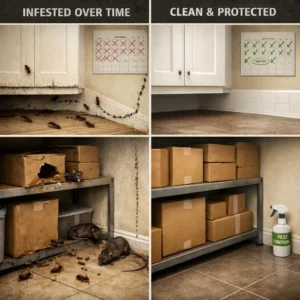
Pest prevention spray is a preventive tool, not a cure-all. When infestations persist, spread, or pose health risks, professional pest control becomes necessary.
Professional services combine inspection, targeted treatment, and prevention strategies that sprays alone cannot achieve.
Conclusion
Pest prevention spray can be an effective part of a broader pest control strategy when used correctly. Understanding safety, timing, application technique, and product limitations helps avoid frustration and wasted effort. When preventive sprays no longer control the problem, professional intervention provides the structure and expertise needed for long-term results.