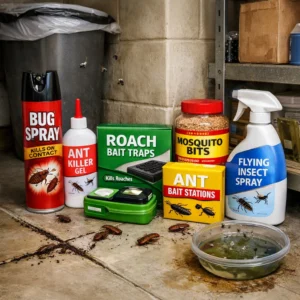
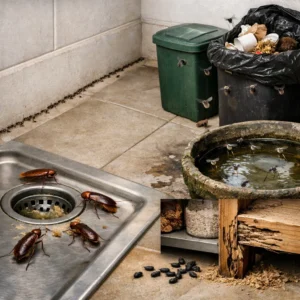
The role of a pest controller goes far beyond simply eliminating insects or rodents. The phrase pest controller duties and responsibilities refers to a wide range of technical, safety, and communication tasks that must be carried out consistently and professionally. A pest controller is responsible not only for resolving current infestations, but also for preventing future problems, protecting human health, complying with regulations, and maintaining accurate records. This article explains the full scope of pest controller duties and responsibilities by walking through a typical workday, outlining technical and safety obligations, highlighting the importance of communication and documentation, and showing how responsibilities differ between residential and commercial environments.
Table of Contents
ToggleA typical workday: from preparation to reporting
A pest controller’s workday usually begins well before arriving at a client’s location. Preparation is a critical responsibility, as mistakes at this stage can affect safety, effectiveness, and compliance later in the day.
Before leaving for the first job, a pest controller typically checks:
- Service schedule and job details for the day
- Type of pests expected at each location
- Required tools, equipment, and treatment products
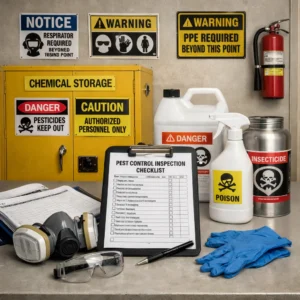
- Personal protective equipment such as gloves, masks, and coveralls
- Vehicle condition and secure storage of chemicals
This preparation ensures that the pest controller can perform each service efficiently without improvising on-site, which could increase risk or reduce treatment quality.
On-site inspection and pest identification
One of the most important pest controller duties and responsibilities is accurate inspection and pest identification. Treating a pest problem without knowing the exact species or source often leads to ineffective results.
During an on-site inspection, a pest controller is responsible for:
- Speaking with the client to understand reported issues
- Visually inspecting affected and surrounding areas
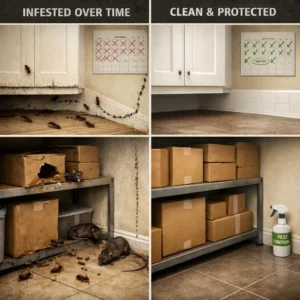
- Identifying signs such as droppings, nesting material, damage, or odor
- Determining the pest species involved
- Locating entry points, harborage areas, and breeding sources
This step requires both experience and attention to detail. Misidentifying a pest can result in applying the wrong treatment method, increasing cost and risk without solving the problem.
Applying Integrated Pest Management principles
Modern pest control is based on Integrated Pest Management, often referred to as IPM. One of the core pest controller duties and responsibilities is to apply IPM principles rather than relying on chemicals alone.
IPM focuses on:
- Understanding pest behavior and life cycles
- Reducing conditions that attract pests
- Using physical and mechanical controls where possible
- Applying chemical treatments only when necessary
- Monitoring results and adjusting strategies
This approach improves long-term control while reducing environmental and health risks.
Physical treatment and exclusion work
Once inspection and planning are complete, the pest controller moves on to physical treatment and exclusion measures. This part of the job often requires hands-on work in challenging environments.
Typical physical responsibilities include:
- Applying treatments to targeted areas
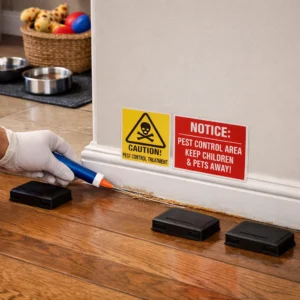
- Setting traps or bait stations where appropriate
- Sealing cracks, gaps, or entry points
- Advising on or performing minor sanitation measures
- Removing nests or contaminated materials when safe to do so
Physical treatment must always follow safety guidelines and manufacturer instructions. Overapplication or incorrect placement can endanger occupants, pets, or the pest controller.
Chemical handling and mixing responsibilities
Handling and mixing pest control products is one of the most regulated pest controller duties and responsibilities. This task requires training, certification, and strict adherence to guidelines.
Responsibilities in this area include:
- Using only approved and authorized products
- Mixing treatments according to labeled instructions
- Preventing spills, leaks, or contamination
- Storing chemicals safely during transport and service
- Disposing of waste materials properly
Improper chemical handling can cause serious health issues, environmental damage, and legal consequences.
Health and safety responsibilities
Health and safety are central to pest controller duties and responsibilities. Pest controllers are exposed to chemicals, disease risks, and physical hazards during daily work.
Key safety responsibilities include:
- Wearing appropriate personal protective equipment
- Understanding disease risks associated with pests
- Minimizing exposure to chemicals
- Protecting occupants, pets, and property during treatment
- Following emergency procedures in case of exposure or accidents
Safety is not optional. It protects the pest controller, the client, and the company’s reputation.
Communication with clients
Strong communication skills are an essential but sometimes overlooked part of pest controller duties and responsibilities. Clients often feel stressed or concerned when dealing with pest issues.
Effective communication involves:
- Explaining inspection findings clearly
- Describing treatment methods in simple terms
- Providing preparation and aftercare instructions
- Answering questions honestly
- Setting realistic expectations about results
Clear communication builds trust and helps clients cooperate with prevention measures.
Educating clients on prevention
A pest controller’s job does not end with treatment. Educating clients on prevention is a key responsibility that improves long-term results.
Prevention guidance may include:
- Improving sanitation and hygiene
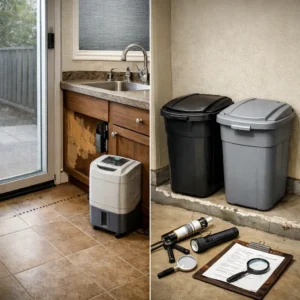
- Reducing moisture and fixing leaks
- Proper food storage practices
- Waste management recommendations
- Structural improvements to reduce entry points
This education helps reduce repeat infestations and supports the value of professional service.
Post-service reporting and documentation
Accurate documentation is one of the most critical pest controller duties and responsibilities, especially in regulated environments.
Post-service reporting typically includes:
- Details of inspection findings
- Pest species identified
- Treatments applied
- Products used
- Safety notes and follow-up recommendations
These records support compliance, accountability, and future service planning.
Maintaining licenses and certifications
Pest controllers are responsible for maintaining required licenses and certifications. Regulations vary by region, but compliance is mandatory.
This responsibility includes:
- Keeping licenses current
- Attending required training sessions
- Staying updated on new regulations
- Learning about new treatment methods
Failure to maintain licensing can result in fines, job loss, or legal action.
Residential versus commercial responsibilities
Pest controller duties and responsibilities differ between residential and commercial environments.
In residential settings, focus is often on:
- Family and pet safety
- Discretion and minimal disruption
- Education and prevention
In commercial settings, additional responsibilities include:
- Compliance with health and safety regulations
- Supporting audit and inspection requirements
- Maintaining detailed service logs
- Coordinating with facility managers
Commercial pest control often requires higher documentation standards and regular monitoring.
Compliance and inspection responsibilities
Compliance is a major part of pest controller duties and responsibilities, particularly in food, healthcare, and industrial environments.
Responsibilities include:
- Preparing sites for regulatory inspections
- Ensuring treatments meet compliance standards
- Maintaining accessible service records
- Identifying risks during routine visits
Non-compliance can result in serious consequences for clients, making this responsibility critical.
Workload expectations and accountability
Pest controllers often manage multiple sites per day, each with different requirements. Time management and accountability are essential.
This includes:
- Following schedules accurately
- Completing services thoroughly
- Reporting issues honestly
- Escalating risks when identified
Accountability ensures consistent service quality and client trust.
Career progression and training
Pest controller duties and responsibilities evolve with experience. Entry-level technicians focus on basic service tasks, while experienced professionals handle complex infestations, training, and supervision.
Career progression may involve:
- Advanced certifications
- Specialization in specific pest types
- Supervisory or inspection roles
- Training and mentoring new technicians
Continuous learning is essential in this field.
Pricing, reporting, and service accountability
Although pest controllers do not set prices arbitrarily, they are responsible for explaining service scope, documenting work accurately, and ensuring that services delivered match what was agreed.
Clear reporting supports:
- Transparent billing
- Client confidence
- Regulatory compliance
- Service accountability
Conclusion
Pest controller duties and responsibilities cover far more than pest removal. From preparation and inspection to treatment, safety, communication, documentation, and compliance, the role requires technical skill, professionalism, and accountability. Understanding these responsibilities helps clients appreciate the value of professional pest control and supports safer, more effective long-term pest management.