Understanding commercial pest control prices is often one of the biggest challenges for business owners, property managers, and facility operators. Unlike residential services, commercial pest control is rarely offered as a single fixed price. The cost depends on multiple variables tied to risk, compliance, scale, and operational impact. For businesses, pest control is not simply an expense—it is a form of risk management that protects reputation, operations, and long-term assets.
This article explains why commercial pest control prices vary, what factors influence cost, how pricing differs across industries such as food service, warehouses, and multi-unit properties, and why prevention programs are usually more cost-effective than emergency treatments. It also covers how pricing tools like estimators help businesses understand starting ranges, and how future-focused practices such as monitoring technology and sustainability affect long-term costs.
Table of Contents
ToggleWhy commercial pest control prices are not a fixed rate
Many businesses initially expect commercial pest control prices to work like utility bills or cleaning services, with a single flat rate. In reality, pest control pricing is closer to insurance or maintenance planning—it is shaped by exposure level, operational risk, and regulatory requirements.
Commercial environments differ widely. A small office with minimal food exposure does not carry the same pest risk as a restaurant, warehouse, or residential building with dozens of units. Because of this, pricing must reflect the real conditions on site rather than assumptions.
Professional pest control providers evaluate cost based on:
- Actual pest risk rather than general category
- Scale and layout of the property
- Industry compliance standards
- Required frequency of service
- Potential consequences of pest activity
This is why two businesses of similar size may receive different pricing for commercial pest control services.
Main variables that influence commercial pest control prices
Several core variables consistently affect commercial pest control prices across industries. Understanding these factors helps businesses evaluate quotes more clearly.
Business size and total area
Larger premises naturally require more inspection time, treatment coverage, and monitoring. Commercial pest control prices are often calculated by square meter or square foot ranges.
For example, basic commercial insect control pricing commonly starts from:
- Up to 50 sqm (500 sqft): AED 120
- Up to 100 sqm (1,000 sqft): AED 180
- Up to 150 sqm (1,600 sqft): AED 230
- Up to 200 sqm (2,200 sqft): AED 275
- Up to 300 sqm (3,300 sqft): AED 360
- Up to 500 sqm (5,400 sqft): AED 485
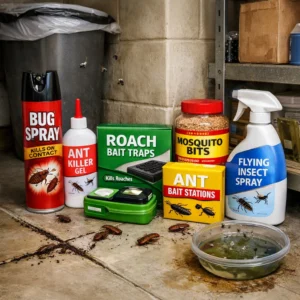
These figures typically apply to common pests such as cockroaches, ants, flies, or mosquitoes and represent basic treatment.
Industry type and compliance requirements
Industry classification plays a major role in commercial pest control prices because different sectors face different risks and regulations.
Food-related businesses such as restaurants, cafés, and food processing facilities require stricter pest control protocols. These environments often demand:
- More frequent inspections
- Detailed documentation
- Higher hygiene standards
- Immediate response capability
As a result, pricing for food service environments is usually higher than for low-risk offices of the same size.
Type of pest risk
Different pests require different levels of effort, materials, and follow-up.
For example:
- General insects like cockroaches or ants follow standard area-based pricing
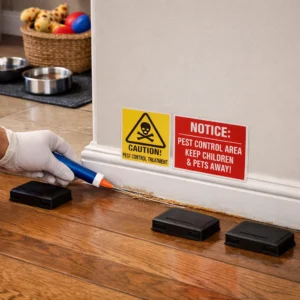
- Rodent control often includes bait stations, monitoring, and exclusion work
- Termite treatment requires inspection-led pricing due to structural risk
Commercial rodent control pricing may include bait station installation, commonly priced at AED 50 per bait station for commercial sites, in addition to area-based treatment costs.
Frequency of service
One-time treatments are usually more expensive per visit than scheduled preventive programs. Businesses that opt for monthly or quarterly service plans often benefit from more stable pricing and reduced emergency risk.
Preventive contracts spread cost over time while lowering the chance of severe infestations.
Industry-specific perspectives on commercial pest control prices
Food service and hospitality
Restaurants, cafés, hotels, and catering facilities operate under strict hygiene expectations. Pest sightings can lead to customer complaints, failed inspections, or even temporary closure.
For these businesses, commercial pest control prices reflect:
- High sensitivity to pest presence
- Frequent inspections
- Rapid response requirements
- Detailed service reporting
In practice, a small restaurant may start from AED 120 for basic service, but ongoing programs are usually recommended to manage risk effectively.
Warehouses and logistics facilities
Warehouses face different challenges. Large floor areas, loading bays, and stored goods increase exposure to rodents and insects.
Commercial pest control prices for warehouses depend heavily on:
- Total storage area
- Type of goods stored
- Rodent access points
- Monitoring requirements
Rodent-focused programs often combine area treatment with multiple bait stations, increasing total cost but reducing long-term damage risk.
Multi-unit residential and mixed-use properties
Buildings with multiple units—such as apartment blocks or mixed-use developments—require coordinated pest control strategies.
Pricing reflects:
- Number of units involved
- Shared service ducts and drainage
- Risk of pest migration between units
Preventive building-wide programs are usually more cost-effective than repeated unit-by-unit emergency treatments.
The cost of inaction versus preventive programs
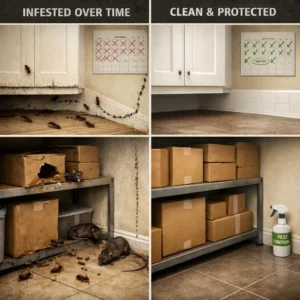
One of the most important aspects of commercial pest control prices is understanding the cost of doing nothing.
Delaying pest control can lead to:
- Emergency treatments at higher cost
- Operational disruption
- Product loss or contamination
- Reputation damage
- Regulatory fines or warnings
Preventive programs may appear more expensive upfront, but they reduce the likelihood of severe infestations and unplanned downtime.
From a business perspective, pest control pricing should be viewed as protection against larger financial risk.
How pricing tools and estimators help businesses
Many businesses use pricing tools or estimators to understand starting ranges before requesting a site inspection.
These tools typically consider:
- Property size
- Business type
- Primary pest concern
While estimators do not replace inspections, they help decision-makers budget realistically and compare options.
Future-focused factors affecting long-term costs
Commercial pest control prices are also influenced by evolving practices and technology.
Future-focused factors include:
- Digital monitoring systems for rodents
- Data-driven inspection reporting
- Integrated pest management strategies
- Eco-friendly and low-toxicity products
These approaches may slightly increase short-term cost but often reduce long-term spending by improving detection and prevention.
Pricing transparency and inspection-based confirmation
All commercial pest control prices discussed here represent basic treatment. Final pricing is always determined after on-site inspection by a specialist.
Inspection allows providers to confirm:
- Actual pest pressure
- Access points and risk zones
- Service frequency needs
- Compliance requirements
No work should proceed without clear explanation and approval of the final cost.
A practical perspective on choosing the right approach
For businesses, commercial pest control prices should never be evaluated in isolation. The real question is whether the service reduces risk, protects operations, and prevents costly disruptions.
First Station Pest Control Services supports commercial clients through inspection-led pricing, transparent cost breakdowns, and programs designed to match real operational risk. For businesses evaluating options, discussing the situation via the Call or WhatsApp button allows a clearer understanding of starting prices, service scope, and long-term cost control.
Conclusion
Commercial pest control prices vary because business risks vary. By understanding cost factors, industry requirements, preventive versus emergency treatment, and future-focused practices, businesses can make informed decisions that protect both operations and budgets.