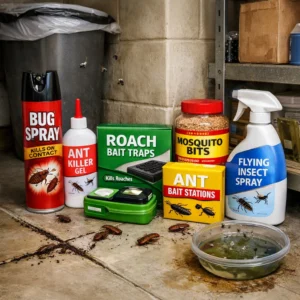
Living with pets changes how pest problems should be handled. When insects, rodents, or other pests appear in a home, the first concern for many pet owners is not only how to remove the pests, but how to do it without putting animals at risk. This is where the topic of pest control and pets becomes especially important. Treatments that may be acceptable in homes without animals can pose serious risks to dogs, cats, birds, reptiles, and other pets if the wrong approach is used.
This article explains pest control and pets from a safety-first perspective. It covers how pet safety should always be the top priority, which treatment approaches are generally considered more pet-safe, which ingredients and methods should be avoided, and why safety can vary significantly depending on the type of pet. It also outlines a clear pre-during-post pest control protocol, explains preventive strategies using an Integrated Pest Management approach, provides a scannable overview of common pests with pet-safe control options, clarifies when DIY methods may be enough and when professional help is safer, and addresses common myths that often mislead pet owners.
Table of Contents
ToggleWhy pet safety must be the top priority in pest control
Pets are more vulnerable to pest control chemicals than humans for several reasons. They are closer to the ground, more likely to lick surfaces, groom themselves, and explore treated areas with their noses and paws. Some pets also have much smaller body weight, which means even low levels of exposure can cause serious reactions.
When discussing pest control and pets, safety should always come before speed or convenience. A fast solution that ignores pet safety can lead to poisoning, respiratory problems, neurological symptoms, or long-term health issues.
Common reasons pets are at higher risk include:
- Direct contact with treated floors, carpets, or baseboards
- Licking paws or fur after walking on treated surfaces
- Chewing treated wood, plants, or bait stations
- Sensitivity to airborne sprays or fumes
Because of these risks, pest control decisions should always be made with pets in mind, not as an afterthought.
Understanding that pet safety varies by animal type
One of the most misunderstood aspects of pest control and pets is the idea that a treatment is either “safe for pets” or “not safe.” In reality, safety depends heavily on the type of pet and how it interacts with its environment.
Dogs
Dogs are often exposed through paw contact and grooming. They may also chew objects, dig in treated soil, or investigate bait stations. While some treatments are designed to be low-risk for dogs once dry, ingestion remains a concern.
Cats
Cats are extremely sensitive to certain chemicals, especially some insecticides and essential oils. They groom frequently, which increases the risk of ingesting residues. Products that may be tolerated by dogs can be dangerous for cats.
Birds
Birds are highly sensitive to airborne chemicals. Even low concentrations of fumes or sprays can cause respiratory distress. Pest control around birds requires extra caution, ventilation, and often temporary relocation.
Reptiles and amphibians
Reptiles and amphibians absorb chemicals through their skin and are sensitive to environmental changes. Many standard pest control treatments are not suitable around them, especially in enclosed spaces.
Because of these differences, pest control and pets must be approached with a customized plan rather than a one-size-fits-all solution.
Pet-safe pest control options and approaches
Pet safety does not mean pests must be tolerated. It means choosing control methods that minimize exposure while remaining effective.
Common pet-safer approaches include:
- Targeted treatments applied only where pests are active
- Bait-based systems placed in secure, enclosed stations
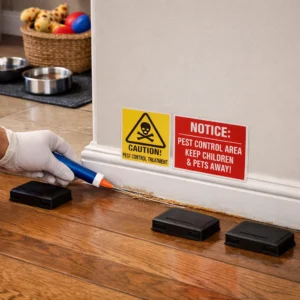
- Gel baits instead of widespread spraying
- Crack-and-crevice applications rather than surface treatments
- Non-chemical methods as part of a broader strategy
In pest control and pets scenarios, the goal is always to reduce the amount of product used while increasing precision.
Ingredients and methods to be cautious about
Not all pest control products are equal when it comes to pet safety. Some ingredients and application methods require extra caution or complete avoidance depending on the pet.
Ingredients and methods that often raise concerns include:
- Loose rodent poison pellets accessible to pets
- High-toxicity sprays applied to open surfaces
- Fogging or fumigation without proper precautions
- Certain essential oils that are toxic to cats and birds
- Improperly secured bait stations
This is why pest control and pets should always be discussed openly with any service provider before treatment begins.
Pre-during-post pest control protocol for homes with pets
A clear protocol helps reduce risk and anxiety for pet owners. Pest control and pets should follow a structured process before, during, and after treatment.
Before treatment
- Inform the pest control provider about all pets in the home
- Ask which products and methods will be used
- Remove pet food, water bowls, toys, and bedding from treatment areas
- Plan temporary relocation if advised, especially for birds or reptiles
During treatment
- Keep pets out of treated areas
- Ensure proper ventilation if required
- Follow technician instructions carefully
After treatment
- Wait for the recommended re-entry time before allowing pets back
- Clean food and water bowls before reuse
- Monitor pets closely for unusual behavior
- Do not wash treated areas unless instructed, as this may reduce effectiveness
Following this protocol is a core part of responsible pest control and pets management.
Warning signs of pesticide exposure in pets
Even with precautions, pet owners should know the warning signs of possible exposure. Early detection can prevent serious outcomes.
Common signs to watch for include:
- Excessive drooling or foaming at the mouth
- Vomiting or diarrhea
- Lethargy or weakness
- Tremors or seizures
- Difficulty breathing
If any of these symptoms appear after pest control treatment, veterinary advice should be sought immediately.
Preventive strategies using an Integrated Pest Management approach
One of the safest ways to handle pest control and pets is to reduce reliance on chemicals altogether. Integrated Pest Management (IPM) focuses on prevention, monitoring, and targeted action.
Key IPM strategies include:
- Sealing cracks, gaps, and entry points
- Proper food storage in sealed containers
- Regular cleaning of feeding areas
- Managing moisture and fixing leaks
- Yard maintenance to reduce nesting sites
By making the environment less attractive to pests, the need for chemical treatments is reduced, which directly benefits pets.
Common pests and pet-safe control approaches
The table below provides a quick overview of common pests and generally safer control approaches when pets are present:
| Pest | Pet-Safer Control Approach | Practical Tip |
|---|---|---|
| Cockroaches | Gel baits in enclosed areas | Place baits behind appliances and inside cabinets |
| Ants | Targeted bait stations | Seal entry points after treatment |
| Rodents | Secured bait stations or traps | Never leave poison loose |
| Mosquitoes | Source reduction and targeted treatment | Remove standing water |
| Fleas | Combined pet treatment and environment control | Coordinate with a veterinarian |
DIY methods versus professional pest control
DIY pest control can be sufficient in limited situations, such as early-stage infestations or preventive maintenance. However, pest control and pets adds complexity that DIY solutions may not handle safely.
DIY may be enough when:
- Pest activity is minimal
- Non-toxic or mechanical methods are used
- Pets can be fully isolated from treated areas
Professional help is safer when:
- Pests are persistent or spreading
- Rodents or termites are involved
- Multiple pets with different sensitivities are present
- Birds or reptiles are in the home
Questions to ask a pest control provider when you have pets
Before agreeing to treatment, pet owners should ask clear questions. This is a critical part of pest control and pets safety.
Important questions include:
- Which products will be used and why
- Are these products safe for my specific pets
- How long should pets stay out of treated areas
- What preparation is required before treatment
- What signs of exposure should I watch for
A responsible provider should answer these questions clearly and without hesitation.
Common myths about pest control and pets
There are many myths that can put pets at risk if followed blindly.
“Natural treatments are always safe”
This is one of the most dangerous misconceptions. Some natural substances and essential oils are toxic to pets, especially cats and birds.
“If it’s safe for dogs, it’s safe for all pets”
Different animals have very different sensitivities. What works for one pet may be dangerous for another.
“Once it dries, there is no risk”
While drying reduces risk, ingestion or prolonged contact can still be harmful in some cases.
A practical next step for homes with pets
Managing pests while protecting animals requires balance, planning, and the right expertise. Pest control and pets should never be handled with guesswork or assumptions. When pest activity continues despite preventive efforts, professional guidance becomes the safest option.
First Station Pest Control Services approaches pest control and pets with safety as a priority. By combining inspection-led treatment, careful product selection, and clear communication, treatments are designed to protect both the household and its animals. If you are unsure which approach is safest for your pets, using the WhatsApp or Call button at the top of the page allows you to discuss options calmly and choose the most responsible path forward.
Conclusion
Pest control and pets can coexist safely when decisions are made with care. By understanding pet-specific risks, following a clear treatment protocol, focusing on prevention through IPM, and knowing when to seek professional help, pest problems can be managed without compromising the health and safety of animals.