Food pest control is one of the most sensitive and high-impact areas of pest management. Whether it involves a home kitchen, a restaurant, a café, a food factory, a warehouse, or a grocery store, pest activity around food is never just a cleanliness issue. It directly affects food safety, health compliance, customer trust, and long-term business reputation. In food environments, even a single visible pest often signals a much larger unseen problem operating behind walls, inside storage areas, or within supply chains.
This article explains why food pest control carries higher risks than general pest control, how food-related infestations typically develop, which pests are most commonly involved, how they enter food environments, and how a simplified Integrated Pest Management (IPM) approach helps control and prevent infestations. It also compares DIY methods with professional food-grade pest control in terms of safety, effectiveness, and compliance, and explains what inspectors and auditors look for during inspections. Throughout, the focus remains on prevention, operational control, and long-term food safety rather than blame.
Table of Contents
ToggleWhy food pest control is high-risk and high-impact
Food environments are uniquely attractive to pests because they provide exactly what pests need to survive: food, water, shelter, and warmth. Unlike other settings, food-related spaces often operate continuously, receive frequent deliveries, and generate waste daily. This creates constant opportunities for pests to enter and establish themselves.
The risks associated with food pest control are high because:
- Food contamination can lead to foodborne illness
- Regulatory non-compliance can result in warnings, fines, or closures
- Customer trust and brand reputation can be damaged quickly
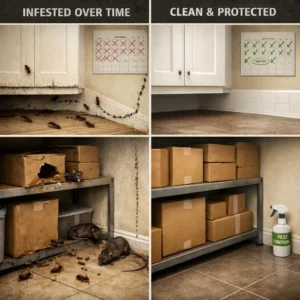
- Infestations often remain hidden until they are advanced
- Cross-contamination can spread through storage and preparation areas
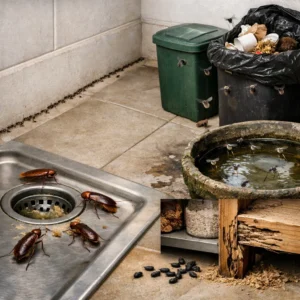
In food settings, visible pests are rarely the full problem. Seeing one cockroach, rodent, or fly usually means there are more hiding nearby.
The hidden nature of food-related infestations
One of the most dangerous aspects of food pest control is that infestations are often invisible in their early stages. Pests adapt to human activity patterns and typically avoid open areas during busy hours.
Common hiding places include:
- Behind shelving and refrigerators
- Inside dry storage racks and pallets
- Within false ceilings and wall cavities
- Under equipment and food preparation tables
- Inside drains, grease traps, and utility lines
Because food operations prioritize speed and efficiency, these areas can be overlooked during daily cleaning, allowing pests to establish breeding zones unnoticed.
Common pests involved in food pest control
Stored product pests
Stored product pests are insects that infest dry goods such as flour, rice, grains, spices, cereals, and animal feed. These pests often arrive already inside packaging and may not be noticed until products are opened or moved.
Typical signs include webbing, small larvae, holes in packaging, or insects inside containers. Once introduced, they can spread rapidly through storage areas.
Rodents
Rats and mice are among the most serious threats in food environments. They contaminate food and surfaces through droppings, urine, and hair, and can cause structural damage by gnawing on packaging, insulation, and electrical wiring.
Rodents are especially problematic because they move silently through walls, ceilings, and drains, making early detection difficult.
Cockroaches
Cockroaches thrive in warm, humid environments with access to food and moisture. Kitchens, storage rooms, dishwashing areas, and waste zones are common hotspots.
They are known carriers of bacteria and can quickly spread contamination across food preparation surfaces.
Flies
Flies are a major concern in food pest control because they move freely between waste, drains, and food preparation areas. Even short exposure can compromise hygiene and raise serious inspection concerns.
Fly activity often increases near waste areas, loading zones, and poorly sealed doors or windows.
How pests enter food environments
Pests rarely appear randomly. Most food-related infestations follow predictable entry paths linked to daily operations.
Common entry routes include:
- Incoming deliveries and packaging
- Pallets and cardboard storage
- Open doors during loading and unloading
- Structural gaps around pipes, vents, and cables
- Floor drains and grease traps
Without proper controls, even well-managed facilities can unintentionally introduce pests through routine business activities.
Understanding food pest control through Integrated Pest Management
Effective food pest control relies on Integrated Pest Management (IPM), a structured approach that focuses on prevention, monitoring, and targeted intervention rather than reactive spraying.
Exclusion and structural control
Exclusion is the first line of defense. This includes sealing gaps, installing door sweeps, maintaining window screens, and ensuring that vents and drains are protected.
Structural maintenance reduces pest access and limits hiding spaces.
Sanitation and moisture control
Sanitation is critical in food pest control. Even small residues can attract pests.
Key practices include:
- Daily cleaning of food preparation areas
- Prompt removal of waste
- Regular drain cleaning
- Immediate repair of leaks and condensation issues
Moisture control is especially important, as many pests rely on water more than food.
Stock management and FIFO rotation
Proper stock rotation using FIFO (First In, First Out) helps prevent stored product pest infestations. Older stock is used first, reducing the time pests have to establish themselves.
Clear labeling, regular inspection of packaging, and avoiding overstocking are essential components.
Ongoing monitoring
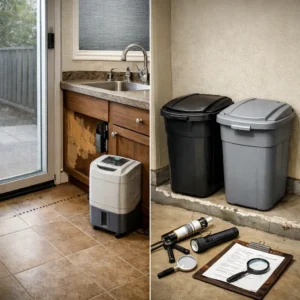
Monitoring allows early detection before infestations become visible. This includes traps, monitoring stations, and routine inspections.
Monitoring does not eliminate pests on its own but provides data to guide effective action.
DIY food pest control versus professional services
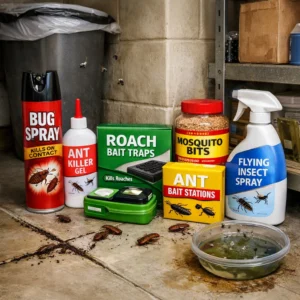
DIY methods are often the first response when pest activity is noticed. While they may offer short-term relief, they have clear limitations in food environments.
DIY approaches: limits and risks
DIY pest control typically focuses on visible pests using sprays or traps. In food settings, this approach can be risky.
Common issues include:
- Improper chemical use near food
- Lack of source identification
- No monitoring or documentation
- Risk of pest resistance
- Failure to meet compliance requirements
DIY methods may also create audit and inspection risks if chemicals are misused.
Professional food-grade pest control
Professional food pest control services are designed to meet safety and compliance standards. They use approved products, controlled application methods, and structured documentation.
Professional services focus on:
- Inspection-led treatment
- Minimal chemical exposure
- Targeted interventions
- Preventive strategies
- Compliance support
While professional services involve higher upfront cost compared to DIY, they often reduce long-term risk, repeat infestations, and compliance issues.
Audit and inspection readiness in food pest control
Food businesses are regularly audited by health authorities or third-party inspectors. Pest control plays a significant role in these inspections.
Inspectors typically look for:
- Evidence of active pest control measures
- Clean and organized storage areas
- Proper waste management
- No visible pest activity or droppings
- Correct placement of monitoring devices
Pest logs and monitoring records
Pest logs document inspection dates, findings, corrective actions, and follow-ups. These records demonstrate proactive management rather than reactive responses.
Monitoring records help show that pest risks are being managed consistently over time.
Safety considerations for people and food
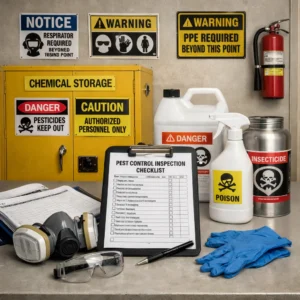
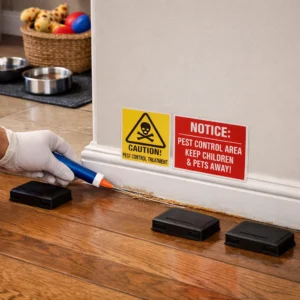
Food pest control must balance effectiveness with safety. Treatments should not compromise food integrity or occupant health.
Safety-focused practices include:
- Using food-grade approved products
- Applying treatments outside of food handling hours
- Clear communication about preparation and re-entry
- Protecting food and contact surfaces
Eco-friendly or low-toxicity options further reduce health risks while maintaining control.
Food pest control as an operational challenge, not a failure
Pest issues in food environments are common and often linked to operational complexity rather than negligence. High-volume operations, constant deliveries, and shared infrastructure all increase exposure.
Effective food pest control recognizes pests as an operational risk that requires systems, monitoring, and continuous improvement—not blame.
A practical path toward long-term food safety
Preventing pest problems in food environments requires a combination of awareness, structured processes, and professional support when needed. Early action, proper sanitation, and ongoing monitoring reduce risk significantly.
First Station Pest Control Services approaches food pest control through inspection-led strategies, Integrated Pest Management principles, and compliance-focused methods. For homeowners and food businesses alike, early consultation helps address concerns before they escalate into safety or compliance issues.
Conclusion
Food pest control is a critical part of food safety and business continuity. By understanding how infestations develop, recognizing the limits of DIY methods, applying IPM principles, and maintaining audit readiness, homes and food businesses can protect health, reputation, and long-term operations. Effective pest control is not about reacting to crises, but about building systems that prevent them.