When searching for a pest control chemicals name list, it’s important to go beyond just a simple alphabetical list. The goal is to help you understand what these chemicals do, how they work, and why they are effective for specific pests. In this guide, we’ll categorize different pest control chemicals based on their functions, explore how to read pesticide labels, and provide practical examples of when to use each chemical. By breaking down the chemicals into categories such as barrier treatments, non-repellent chemicals, insect growth regulators, and more, we will help you make informed decisions about pest control chemicals.
Table of Contents
ToggleCategorizing Pest Control Chemicals
Insecticides and pest control chemicals come in a variety of formulations. To understand them better, it’s essential to group them based on their primary function. Here are the most common categories:
1. Pyrethroids
Pyrethroids are among the most commonly used synthetic chemicals in pest control. They are typically used as barrier treatments, meaning they create a protective layer that pests cannot pass through. They act quickly and are widely used for treating insects such as ants, cockroaches, and mosquitoes.
Common pyrethroid chemicals include:
- Bifenthrin – Known for controlling a variety of pests, especially ants, termites, and mosquitoes.
- Cypermethrin – Effective against ants, spiders, mosquitoes, and fleas.
- Deltamethrin – A broad-spectrum pesticide used for general insect control.
Use cases: Pyrethroids are most commonly used around the home, including gardens, yards, and even in commercial properties. For example, bifenthrin is used to control termites, ants, and mosquitoes around the perimeter of buildings.
2. Neonicotinoids
Neonicotinoids are a class of chemicals that are particularly effective because they are non-repellent. This means that the pests do not recognize the chemical as dangerous, and they walk right through it. Neonicotinoids are used in situations where you want to target pests like termites and ants without them noticing the chemical treatment.
Common neonicotinoid chemicals include:
- Imidacloprid – Primarily used for termite control, but also effective against fleas and ants.
- Dinotefuran – Used for both indoor and outdoor pest control, especially for termites, ants, and fleas.
Use cases: Neonicotinoids are ideal for termite control, as they are absorbed by the insect and kill it over time. They are also used in flea treatments, as they work unnoticed by the insect, which allows them to continue feeding and spreading the chemical throughout the colony.
3. Insect Growth Regulators (IGRs)
Insect Growth Regulators (IGRs) do not directly kill pests but instead inhibit their ability to reproduce, halt their growth, or prevent molting. This makes IGRs highly useful in long-term pest control, particularly for pests like fleas, cockroaches, and flies. IGRs are often part of integrated pest management strategies.
Common IGR chemicals include:
- Methoprene – Commonly used in flea control, preventing flea larvae from maturing.
- Pyriproxyfen – Works similarly to methoprene but is also used to control cockroach populations by halting reproduction.
Use cases: IGRs are typically used in tandem with other chemicals to prevent the next generation of pests. For example, methoprene is often included in flea control products to stop larvae from developing into adults. Pyriproxyfen is frequently used to manage cockroach populations by targeting their reproductive cycles.
4. Fipronil
Fipronil is a broad-spectrum insecticide that works by disrupting the central nervous system of insects. It is a highly effective chemical used in pest control to target ants, termites, cockroaches, and fleas.
Use cases: Fipronil is commonly used for termite control, as it can be applied directly to the soil around buildings to create a barrier. It’s also used for general insect control and is a main ingredient in popular ant and cockroach baits.
5. Cyhalothrin
Cyhalothrin is a pyrethroid used primarily for controlling mosquitoes and flies, making it a common choice for outdoor pest management.
Use cases: Cyhalothrin is typically used in areas where mosquitoes are prevalent. It works by affecting the nervous system of insects, causing paralysis and death. Cyhalothrin is commonly found in outdoor foggers and mosquito sprays used around gardens and public spaces.
Understanding Chemical Labels: Active Ingredients vs. Brand Names
When choosing pest control chemicals, it’s important to understand the difference between active ingredients and brand names. The active ingredient is what makes the chemical effective against pests, while the brand name refers to the company marketing the product.
For example:
- Talstar is a brand name, and its active ingredient is Bifenthrin.
- Advance 375A is another brand that uses the active ingredient Imidacloprid.
- Termidor is a common brand for products containing Fipronil, which is widely used for termite control.
Tip: When you’re searching for pest control chemicals, look for the active ingredient first. The brand name matters but knowing the active ingredient ensures you’re choosing the correct chemical for your pest problem.
How to Read Toxicity Levels on Pesticide Labels
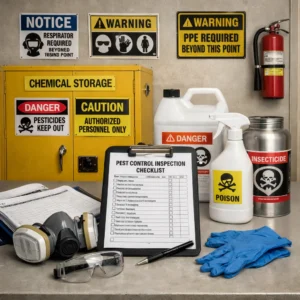
Pesticide labels always include toxicity levels to ensure safe application. The toxicity of a pesticide is typically indicated using one of three categories: Caution, Warning, or Danger.
Understanding these labels:
- Caution: Slightly toxic; often found in over-the-counter products.
- Warning: Moderately toxic; may require more safety precautions but still suitable for home use.
- Danger: Highly toxic; typically restricted to professional-grade chemicals.
For example, products that contain Cypermethrin may be labeled as “Caution” due to their slightly toxic nature, while products with active ingredients like Fipronil may carry a “Danger” label due to their higher toxicity.
Practical Use Cases for Each Chemical
Each type of pest control chemical is formulated for specific types of pests and situations. Here are some practical examples of how different chemicals work:
- Fipronil: Used for termite control, especially in creating a soil barrier around buildings. It’s also used in ant and cockroach baits.
- Cyhalothrin: Effective for controlling mosquitoes in outdoor environments. It’s often used in mosquito foggers to prevent infestation.
- Imidacloprid: A powerful solution for termites and fleas, Imidacloprid is often used in targeted treatments for specific pests that cause long-term problems.
- Bifenthrin: Used for general pest control, especially for ants, cockroaches, and mosquitoes. It is applied to the exterior of buildings to create a barrier against pests.
- Dinotefuran: Another non-repellent chemical ideal for termites, ants, and fleas. It is used when the target pests cannot easily detect the treatment.
Tip: Always check the manufacturer’s recommendations and consult pest control professionals if you are unsure about using a certain chemical in your environment.
Legal Considerations: Restricted Use Pesticides
Some pest control chemicals, especially those labeled “Danger,” are classified as Restricted Use Pesticides (RUP) and can only be applied by licensed professionals. These chemicals are often more toxic and require special handling procedures to protect users and the environment.
For example, while Fipronil is highly effective, it is typically restricted for professional use due to its potency and potential environmental impact. RUPs can only be purchased or applied by certified pest control professionals.
Make sure to check local regulations and restrictions before attempting to purchase or use these types of chemicals.
Eco-friendly Alternatives: How Non-toxic Treatments Work
Many homeowners and businesses prefer eco-friendly pest control options that reduce environmental and health risks. Fortunately, effective eco-friendly pest control options are available without compromising on results.
Eco-friendly treatments typically include:
- Insecticidal soaps that kill pests by suffocating them
- Essential oils like peppermint or citrus that repel insects naturally
- Biological agents, such as nematodes, that target pests without harming the environment
- Physical barriers, such as mesh or sealants, to prevent pest entry
These treatments are safer for humans, pets, and the environment, but they may require repeated applications and a more strategic approach to pest management. Many professional pest control services now offer eco-friendly treatments as part of integrated pest management (IPM) solutions.
Summary of Key Pest Control Chemicals
Here’s a quick recap of the most common pest control chemicals and their functions:
- Pyrethroids (Bifenthrin, Cypermethrin, Deltamethrin): Barrier treatments effective for ants, cockroaches, and mosquitoes
- Neonicotinoids (Imidacloprid, Dinotefuran): Non-repellent chemicals ideal for termites and ants
- Insect Growth Regulators (IGRs) (Methoprene, Pyriproxyfen): Prevent pests from reproducing, used for fleas and cockroaches
- Fipronil: Effective for termite and ant control, as well as cockroach baits
- Cyhalothrin: Used for controlling mosquitoes and flies in outdoor environments
By understanding the right chemical for each pest and its use case, you can make more informed decisions about pest control. Always ensure the safety of people, pets, and the environment by selecting the right treatment for your pest problem.