Ant activity is one of the most common pest problems experienced in homes and businesses. What often starts as a small line of ants near food or water can quickly turn into a persistent infestation if not handled correctly. This is why many people eventually look for pest control for ants after basic cleaning or spraying no longer works. Understanding how ants behave, why they enter buildings, and which control methods actually work makes a big difference in stopping the problem effectively.
This article explains practical and immediate control methods, why ant baits are usually more effective than sprays, safe DIY options to reduce activity, basic ant behavior and identification, long-term prevention strategies, realistic treatment timelines, and when professional pest control for ants becomes necessary—especially for large infestations or structural risks such as carpenter ants.
Why ants enter homes and businesses
Ants do not enter buildings randomly. They are constantly searching for food, water, and safe nesting areas. Once a worker ant finds a suitable source, it leaves behind a chemical trail that guides other ants to the same location.
Common reasons ants enter indoor spaces include:
- Unsealed food or crumbs on floors and surfaces
- Sugary spills, grease, or residue in kitchens
- Moisture from leaking pipes or condensation
- Pet food left out for long periods
- Easy access through cracks, gaps, or door frames
Because ants communicate through scent trails, even a small food source can attract a large number of ants within a short time.
Basic ant behavior and how scent trails work
Understanding ant behavior helps explain why some control methods fail. Ant colonies rely on worker ants to search for food. When a worker finds food, it releases pheromones along its path back to the nest. Other ants follow this trail, reinforcing it with their own pheromones.
This is why:
- Ants often appear in straight or organized lines
- Cleaning visible ants does not stop new ones from coming
- Spraying individual ants rarely solves the problem
As long as the scent trail and food source remain, ants will continue to return.
Why ant sprays often fail
Many people try to solve ant problems using sprays. While sprays may kill ants on contact, they usually do not address the colony itself.
Common problems with sprays include:
- Only killing visible ants, not the nest
- Causing ants to scatter and create new trails
- Making colonies relocate deeper into walls or floors
- Providing only temporary relief
In some cases, frequent spraying can make the infestation harder to control over time.
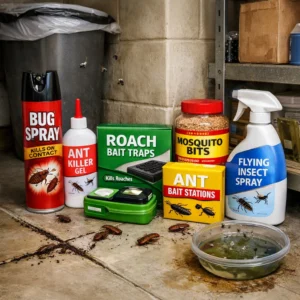
Why ant baits are generally more effective
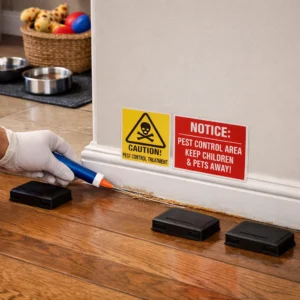
Ant baits work differently from sprays. Instead of killing ants immediately, baits attract worker ants with food mixed with a slow-acting substance. The workers carry the bait back to the colony, where it is shared with other ants, including the queen.
This approach is effective because:
- The bait reaches the nest, not just visible ants
- Colony activity gradually declines over time
- New ants stop appearing once the colony is controlled
However, baits must be used correctly. Placing the wrong type of bait or disturbing ants while they are feeding can reduce effectiveness.
Safe DIY options to reduce active ant activity
DIY methods can help reduce ant activity in early stages or alongside professional treatment. These methods focus on removing attractants and disrupting scent trails.
Practical DIY steps include:
- Wiping surfaces with vinegar and water to remove scent trails
- Storing food in sealed containers
- Cleaning floors and counters daily
- Fixing leaks and reducing moisture
- Sealing small cracks and gaps around entry points
These steps can help slow ant activity but may not eliminate an established colony.
What DIY methods cannot do
DIY solutions have clear limitations. They are usually ineffective when ant colonies are large, hidden, or located inside walls, floors, or outdoor soil near the building.
DIY methods often fail when:
- Ants return daily despite cleaning
- Multiple rooms or areas are affected
- Ant activity increases after treatment
- There are multiple entry points
At this stage, professional pest control for ants is often required.
Realistic expectations about treatment timelines
One common concern with ant treatment is that activity may temporarily increase after bait placement. This is normal and expected.
What usually happens:
- More ants appear as they collect bait
- Activity peaks within a few days
- Ant numbers gradually decline as the colony is affected
Complete control can take days or weeks depending on colony size and location.
Long-term prevention after ant control
Once ant activity is reduced, prevention becomes the key focus.
Effective prevention includes:
- Maintaining strict sanitation routines
- Regularly sealing cracks and gaps
- Managing outdoor vegetation near buildings
- Monitoring moisture-prone areas
Prevention reduces the chance of future infestations.
When professional pest control for ants becomes necessary
Professional pest control for ants is recommended when infestations are persistent, widespread, or pose structural risks.
Professional help is especially important when:
- Ant colonies are inside walls or floors
- Outdoor nests keep reinfesting indoor areas
- DIY baits and cleaning fail repeatedly
- Carpenter ants are suspected
Carpenter ants, in particular, can damage wood and require careful inspection and targeted treatment.
How professional ant control usually works
Professional ant control focuses on identifying the species, locating nests, and selecting the correct treatment strategy.
Typical professional steps include:
- Inspection of indoor and outdoor areas
- Identification of ant species and colony behavior
- Targeted baiting and treatment
- Entry point sealing recommendations
- Follow-up monitoring if needed
This approach increases the chance of long-term success.
Pricing expectations for pest control for ants
Understanding pricing helps set realistic expectations. Ant control pricing depends on property size, infestation severity, and whether outdoor areas are involved.
For residential ant pest control for ants, basic apartment pricing typically follows this structure:
- Studio apartment: AED 119
- 1-bedroom apartment: AED 139
- 2-bedroom apartment: AED 179
- 3-bedroom apartment: AED 211
- 4-bedroom apartment: AED 238
- 5-bedroom apartment: AED 287
For outdoor garden ant treatment, pricing generally starts from AED 150 for areas up to 1,000 sqft, increasing based on area size.
All prices refer to basic pest control treatment. Final pricing is confirmed after inspection based on infestation level and treatment complexity. Customers are always informed before work begins.
Maintaining an ant-free environment over time
Maintaining control after treatment requires cooperation between occupants and pest control professionals.
Best practices include:
- Regular inspections of high-risk areas
- Immediate cleanup of food and spills
- Prompt repair of leaks
- Monitoring for early signs of ant activity
A practical next step if ants keep returning
Ant infestations rarely resolve on their own. Left untreated, they can spread, disrupt daily life, and in some cases cause structural concerns. While DIY steps can help early on, repeated ant activity usually signals a deeper issue.
First Station Pest Control Services provides structured pest control for ants using inspection-led treatment, approved methods, and clear pricing. If you are unsure whether professional treatment is needed yet, using the WhatsApp or Call button at the top of the page allows you to discuss the situation calmly and understand the safest next step before the problem escalates.
Conclusion
Effective pest control for ants requires understanding ant behavior, using the right control methods, setting realistic expectations, and knowing when to involve professionals. With proper treatment and prevention, ant infestations can be controlled and kept from returning.