Few things are more unsettling than the moment you spot a cockroach scurrying across your kitchen floor or bathroom. The sudden appearance of these unwelcome guests often leaves us feeling horrified, disgusted, and desperate for a solution. But don’t panic—while the sight of a cockroach is enough to send anyone into a frenzy, there are effective ways to deal with them. This article will guide you through the steps to tackle cockroach infestations, explaining when DIY methods are useful and when it’s time to call in professional pest control for cockroaches.
Table of Contents
ToggleThe Horror of Cockroaches: Understanding Your Enemy
Seeing a cockroach is enough to ruin anyone’s day. Their fast movement, creepy appearance, and ability to survive almost anything make them one of the most difficult pests to deal with. But before you rush to grab the nearest can of bug spray, it’s important to understand a few things about cockroaches. These pests are not only resilient but also dangerous, spreading bacteria and allergens that can lead to health problems.
Here’s a quick, simple solution for immediate action: if you spot a cockroach, mix dish soap and water in a spray bottle and spray it directly on the roach. This will suffocate it temporarily, giving you time to deal with the bigger issue at hand. But, while this may kill a few roaches in the moment, long-term pest control for cockroaches requires a more structured and comprehensive approach.
Common Types of Cockroaches and How to Treat Them
Understanding the type of cockroach invading your space is the first step toward developing a successful pest control strategy. Different species have different behaviors and habits, and understanding them is crucial for effective treatment.
1. German Cockroach
The German cockroach is the most common type found in homes. These small, light-brown roaches are about 1 to 1.5 inches long and prefer warm, moist areas such as kitchens and bathrooms. They are also known to reproduce quickly, laying up to 40 eggs at once, which can lead to rapid infestations if not addressed properly.
Best treatment: For German cockroaches, gel baits and insect growth regulators (IGRs) are often the most effective. These baits attract the roaches, and when they eat the bait, they will die, and sometimes even spread the poison to others in their colony.
2. American Cockroach
American cockroaches are much larger than the German variety, reaching up to 3 inches in length. These roaches are reddish-brown with a yellowish figure-eight pattern on their back. They prefer warm, dark areas such as basements, drains, and sewers but can also invade homes.
Best treatment: American cockroaches respond well to boric acid and baits. Boric acid acts as a desiccant, drying out the cockroach and killing it. It is also safer to use in areas with children and pets, as long as it is applied carefully.
3. Oriental Cockroach
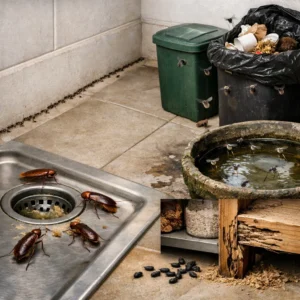
Oriental cockroaches are dark brown or black and are commonly found in damp areas such as basements, crawl spaces, and under sinks. While not as fast-moving as German cockroaches, they are still a nuisance and can be found near water sources.
Best treatment: A combination of baits and sealing entry points works best for Oriental cockroaches. As these roaches tend to stay in one location, it is critical to eliminate their water source and treat with both baits and sprays targeting the area.
Why DIY Methods Often Fail
DIY methods can be helpful for minor cockroach issues, but they are often ineffective for more serious infestations. Here’s why:
1. Bug Sprays Scatter, Not Eliminate
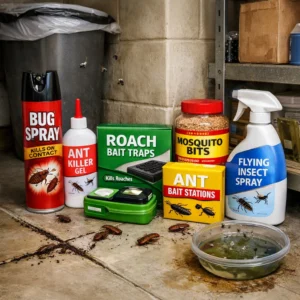
Bug sprays may kill a few cockroaches on contact, but they don’t address the root cause of the problem. In fact, many sprays only scatter the colony, pushing them into hiding and making them more difficult to eradicate. This temporary solution doesn’t kill the source, and the infestation is likely to return.
2. Baits Can Be Ineffective If Too Close to Sprays
If you’ve been using sprays and then place baits near those areas, you may render the baits ineffective. Cockroaches avoid areas where they sense chemicals, meaning they’ll be less likely to consume the bait if it’s in proximity to recently treated areas.
The 3-Step System for Effective Pest Control for Cockroaches
The key to effective pest control for cockroaches lies in a layered defense approach that includes sanitation, elimination, and exclusion. This 3-step system allows for thorough control, preventing future infestations while dealing with the current issue.
1. Sanitation: Clean Kitchen Checklist
The first step in tackling a cockroach infestation is sanitation. Roaches are attracted to food, grease, and crumbs, so keeping your kitchen spotless is a crucial step. Here’s a checklist to follow:
- Clean under appliances, counters, and around the sink regularly
- Store food in sealed containers
- Wipe down kitchen surfaces and stovetops after every use
- Take out the trash daily, especially food waste
- Repair any leaks or plumbing issues to prevent water sources
By eliminating the food and water sources, you reduce the cockroaches’ attraction to your home, making it less likely they’ll return.
2. Elimination: Using Gel Baits, Boric Acid, or IGRs
The next step is to eliminate the current population of cockroaches. The most effective methods are:
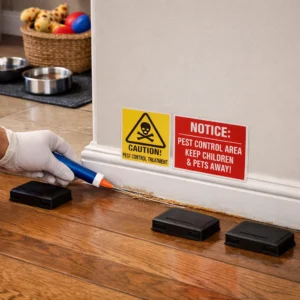
- Gel baits: These are widely used because they are highly attractive to cockroaches. When cockroaches eat the bait, they will die, and some will carry the poison back to the colony.
- Boric acid: This natural insecticide is toxic to cockroaches. When they walk across it, they ingest it, which leads to death.
- Insect Growth Regulators (IGRs): IGRs prevent cockroaches from reaching maturity and reproducing, halting their ability to reproduce and eventually leading to a dead colony.
For best results, use a combination of these treatments, targeting multiple areas where cockroaches are likely to enter and spread. Be sure to follow manufacturer instructions when applying these treatments.
3. Exclusion: Sealing Entry Points
The final step is exclusion. Cockroaches often enter homes through cracks in the walls, gaps around windows and doors, and other entry points. Sealing these openings is essential to prevent re-entry.
Key exclusion measures include:
- Seal cracks and gaps in walls, floors, and doors
- Install door sweeps and window screens
- Use weatherstripping around windows and doors
By preventing entry, you effectively reduce the chances of future infestations.
When to Stop DIY and Call a Professional
There are times when DIY pest control simply isn’t enough. If you continue to see cockroaches, especially during the day, it’s a sign that the infestation is likely well-established. Cockroaches are nocturnal creatures, so daytime activity usually indicates that they are actively breeding or are in a severe infestation.
If your DIY efforts aren’t working, or if you’re dealing with a large-scale infestation, it’s time to call a professional pest control service. They can provide advanced treatments and ensure the infestation is completely eliminated.
Pricing for Professional Pest Control for Cockroaches
When it comes to professional pest control for cockroaches, pricing varies depending on the severity of the infestation, the size of the area, and the specific treatment required. Typically, prices for residential cockroach control start from:
- Studio apartment: AED 119
- 1-bedroom apartment: AED 139
- 2-bedroom apartment: AED 179
- 3-bedroom apartment: AED 211
- 4-bedroom apartment: AED 238
- 5-bedroom apartment: AED 287
These prices include inspection and basic treatment. More extensive treatments for larger properties or severe infestations may cost more. If you are looking for a more comprehensive solution, commercial properties or severe infestations could be priced based on area and risk level. For a more accurate price, it’s best to get a quote after an inspection by a professional.
For the latest prices and more details, visit our pricing page.
Eco-friendly Options for Pest Control
Eco-friendly pest control methods are becoming more popular for those concerned about the environment and their health. These methods focus on using non-toxic solutions that are effective but safe for families and pets.
Some of the most common eco-friendly pest control treatments include:
- Using natural insecticides such as diatomaceous earth
- Non-toxic traps and baits
- Integrated Pest Management (IPM) practices that combine physical barriers, biological control, and minimal chemical use
For those with children, pets, or environmental concerns, these methods can provide effective pest control without exposing the household to harsh chemicals.
Conclusion
Dealing with a cockroach infestation requires a balanced approach: effective sanitation, elimination methods, and exclusion strategies. DIY solutions can help at the start, but when the infestation becomes severe or hard to control, it’s time to call in the professionals.
Professional pest control for cockroaches provides long-term, safe, and effective results. Whether you’re dealing with a few roaches or a full-blown infestation, First Station Pest Control Services offers reliable and thorough pest management solutions. Get in touch with us for an inspection, and we’ll help you create a pest-free environment that you can feel comfortable in.