Pest control rules and regulations exist to protect public health, property, and the environment. They are not written only for large pest control companies, but also affect homeowners, tenants, business owners, property managers, and anyone involved in applying or arranging pest control treatments. Understanding how these rules work, who they apply to, and where the legal boundaries are is essential to avoid safety risks, legal trouble, and costly compliance mistakes.
This article explains pest control rules and regulations in a practical and clear way. It covers who the regulations apply to, the difference between residential and commercial responsibilities, where DIY treatment is legally allowed and where licensed professionals are required, why state and local regulations matter, safety and environmental compliance requirements, documentation and record-keeping obligations, a practical compliance checklist, the consequences of non-compliance, and common myths that often lead people to unintentionally break the rules.
Table of Contents
ToggleWho pest control rules and regulations apply to
Pest control rules and regulations apply to more people than many assume. They are not limited to licensed pest control companies alone. In practice, several groups are affected, each with different levels of responsibility.
These groups include:
- Homeowners performing pest control on their own property
- Tenants living in rented residential units
- Landlords and property owners
- Commercial property managers
- Business owners, especially in food-related industries
- Licensed pest control professionals and companies
The key difference between these groups is the scope of what they are legally allowed to do and what level of responsibility they carry if something goes wrong.
Residential versus commercial pest control responsibilities
One of the most important distinctions in pest control rules and regulations is the difference between residential and commercial properties.
Residential properties
In residential settings, such as private homes or individual apartments, limited DIY pest control is often allowed. This usually includes:
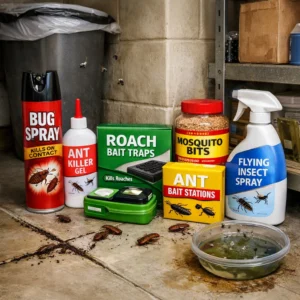
- Using store-bought household insecticides approved for consumer use
- Applying treatments strictly according to the product label
- Treating only the user’s own living space
However, residential DIY treatment has clear limits. Homeowners and tenants are generally not allowed to:
- Use restricted-use or professional-grade pesticides
- Treat shared building areas without permission
- Apply chemicals in ways not specified on the label
- Perform treatments that may affect neighboring units
Once treatment goes beyond these limits, licensed professionals are legally required.
Commercial properties
Commercial properties are subject to stricter pest control rules and regulations. This includes restaurants, cafes, hotels, offices, warehouses, schools, healthcare facilities, and retail spaces.
In most cases, commercial pest control:
- Must be handled by licensed pest control professionals
- Requires documented treatment plans
- Is subject to inspection by regulatory authorities
- Must meet workplace safety and environmental standards
DIY pest control by unlicensed staff in commercial settings is often restricted or completely prohibited, especially in food-handling or healthcare environments.
The legal boundary between DIY treatment and licensed professionals
A common source of confusion in pest control rules and regulations is where DIY treatment legally ends and professional work begins.
In general, DIY pest control is legally limited to:
- Low-toxicity, consumer-approved products
- Small-scale, localized application
- Personal residential use only
Licensed professionals are legally required when:
- Restricted-use pesticides are involved
- Treatment affects shared or public areas
- The infestation is widespread or structural
- The property is commercial or public-facing
- Regulations require formal documentation and reporting
Crossing this boundary without proper licensing can lead to serious penalties, even if the intent was simply to solve a pest problem quickly.
Why state and local regulatory requirements matter
Pest control rules and regulations are enforced at both state and local levels. These regulations exist to ensure that pest control activities do not endanger people, animals, or the environment.
Key regulatory areas include:
- Licensing requirements for pest control operators
- Approval and restriction of pesticide products
- Rules on how and where chemicals may be applied
- Notification requirements for occupants or neighbors
- Inspection and enforcement procedures
Even if a product is legally sold, it may not be legal to use it in every setting or in every way. Regulations determine who can apply it, where, and under what conditions.
Licensing obligations and restricted-use pesticides
One of the most important aspects of pest control rules and regulations is licensing.
Licensed pest control professionals must:
- Complete approved training programs
- Pass regulatory examinations
- Maintain ongoing education requirements
- Renew licenses periodically
Restricted-use pesticides are chemicals that pose higher risks if misused. These products:
- Are not available to the general public
- Require specialized knowledge to apply safely
- Must be used according to strict guidelines
Using restricted-use pesticides without proper licensing is a serious violation of pest control rules and regulations.
Notification rules for tenants and neighboring properties
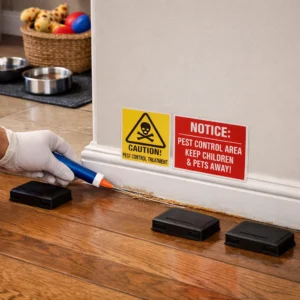
Many pest control rules and regulations require notification before treatment takes place, especially in multi-unit buildings or commercial properties.
Notification rules may include:
- Informing tenants before treatment
- Posting notices in common areas
- Providing information about chemicals used
- Specifying re-entry times after treatment
These rules exist to protect vulnerable individuals, such as children, elderly residents, and people with respiratory conditions.
Safety and environmental compliance requirements
Safety is a central focus of pest control rules and regulations. Improper pesticide use can cause serious health and environmental harm.
Personal protective equipment
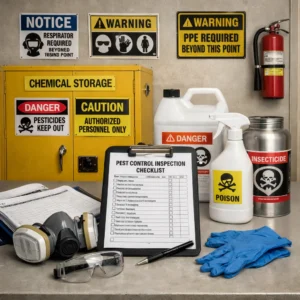
Licensed professionals are required to use appropriate personal protective equipment, such as gloves, masks, and protective clothing, depending on the treatment.
Chemical storage and disposal
Regulations require that pest control chemicals:
- Be stored in secure, labeled containers
- Be kept away from food and living areas
- Be disposed of according to environmental laws
Improper storage or disposal is a common compliance violation.
Protection of pollinators and ecosystems
Pest control rules and regulations increasingly focus on protecting pollinators, wildlife, and surrounding ecosystems.
This includes:
- Restrictions on outdoor spraying
- Timing treatments to avoid pollinator activity
- Using targeted application instead of broad spraying
Documentation and record-keeping responsibilities
Documentation is a critical but often overlooked part of pest control rules and regulations.
Licensed operators are typically required to record:
- Date and location of treatment
- Pest type identified
- Products and quantities used
- Application method
- Technician name and license number
These records must often be retained for a specific period, such as one to several years, and made available for inspections or audits.
Why record-keeping matters for inspections and audits
Regulatory inspections rely heavily on documentation. Missing or incomplete records can lead to penalties even if the treatment itself was performed correctly.
Proper records help:
- Demonstrate compliance
- Track recurring pest issues
- Support follow-up treatment decisions
- Protect businesses during audits
Practical pest control compliance checklist
The following checklist can help assess basic compliance with pest control rules and regulations:
- Are treatments performed by licensed professionals when required?
- Are only approved products being used?
- Are chemicals applied according to label instructions?
- Are tenants or occupants notified when required?
- Are safety precautions clearly communicated?
- Are treatment records properly maintained?
- Is chemical storage secure and compliant?
- Are environmental protections considered?
Consequences of non-compliance
Ignoring pest control rules and regulations can lead to serious consequences.
Common penalties include:
- Fines and financial penalties
- Stop-work orders
- License suspension or revocation
- Legal liability for health or environmental damage
- Reputational damage for businesses
In severe cases, non-compliance can result in long-term business disruption or legal action.
Common myths about pest control regulations
Misunderstandings about pest control rules and regulations are common and often costly.
Some frequent myths include:
- “If I buy it in a store, I can use it anywhere”
- “DIY is always legal in commercial spaces”
- “One-time spraying solves compliance issues”
- “No one checks pest control records”
Believing these myths often leads to violations that could have been avoided with proper information.
Why professional pest control supports compliance
Professional pest control services are structured to follow pest control rules and regulations by design. Licensing, training, documentation, and safety protocols are part of standard operations.
For property owners and businesses, using professional services reduces compliance risk and provides peace of mind that treatments meet legal and safety requirements.
Conclusion
Pest control rules and regulations exist to protect people, property, and the environment. Understanding who they apply to, where DIY ends, what documentation is required, and what happens when rules are ignored helps prevent costly mistakes. By following proper procedures and using licensed professionals when required, pest control can be carried out safely, legally, and effectively.