Finding the right pest solution often starts with confusion. Many pests look similar, cause overlapping damage, and appear suddenly without a clear source. Acting too fast can lead to ineffective treatment, while waiting too long can allow the problem to spread. A practical pest solution is not about reacting emotionally, but about understanding what you are dealing with, choosing the right level of action, and preventing the issue from coming back.
This guide is designed to help you move from uncertainty to clarity. It covers visual pest identification using clear comparison cues, a tiered action plan from simple DIY steps to professional-grade treatment, safety and toxicity considerations, root-cause analysis, a symptom-based matching guide, realistic cost considerations, and clear navigation so you can quickly find the solution most relevant to your situation.
Table of Contents
ToggleQuick navigation
- How to visually identify common pests
- Symptom-based pest matching guide
- Tiered action plan: DIY to professional
- Safety and toxicity considerations
- Root-cause analysis and prevention
- Understanding treatment cost factors
- Knowing when expert help is required
How to visually identify common pests
Correct identification is the foundation of any effective pest solution. Treating the wrong pest often leads to wasted effort and recurring infestations. Many pests look similar at first glance, but their behavior, hiding spots, and damage patterns differ.
Cockroaches vs beetles
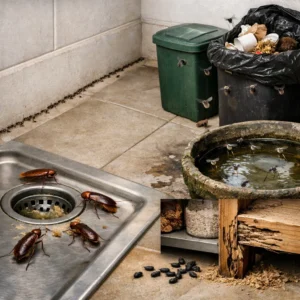
Cockroaches typically have flat, oval-shaped bodies with long antennae. They move quickly when exposed to light and are often found near kitchens, bathrooms, and drains. Beetles are usually rounder or more rigid in shape, move more slowly, and are often attracted to stored food or fabrics.
Damage indicators: Cockroach droppings resemble black pepper or coffee grounds and are often found near cabinets or appliances. Beetles may leave holes in packaging or fabric.
Bed bugs vs fleas
Bed bugs are flat, reddish-brown insects that hide in mattresses, bed frames, and furniture seams. Fleas are smaller, darker, and jump quickly when disturbed.
Damage indicators: Bed bug bites often appear in lines or clusters and are usually noticed after sleeping. Flea bites are often around ankles and lower legs.
Ants vs termites
Ants have narrow waists and bent antennae, while termites have straight antennae and thicker bodies. Termites are often mistaken for ants during swarming seasons.
Damage indicators: Ants are usually seen following trails. Termites cause hollow-sounding wood, mud tubes, and structural weakening.
Rats vs mice
Rats are larger with thicker tails and leave bigger droppings. Mice are smaller, with pointed snouts and fine droppings.
Damage indicators: Both chew wires and wood, but rat damage is usually more severe and widespread.
Symptom-based pest matching guide
When the pest itself is not visible, symptoms can help narrow down the cause. This symptom-based approach allows you to take immediate, appropriate action.
- Small black droppings near cabinets: Likely cockroaches or rodents
- Itchy bites after sleeping: Possible bed bugs or mites
- Rustling sounds at night: Likely rodents
- Holes in wooden furniture: Possible termites
- Ant trails along walls: Active ant colony nearby
- Musty smell and wall discoloration: Mold-related issues
Matching symptoms to pests helps you choose the right pest solution instead of guessing.
Tiered action plan: from quick DIY to professional treatment
An effective pest solution follows a tiered approach. Not every situation requires professional treatment immediately, but there are clear limits to what DIY methods can achieve.
Tier 1: Quick DIY actions
This level is suitable for very early or mild pest activity.
- Seal food in airtight containers
- Clean crumbs, grease, and spills daily
- Fix leaks and remove standing water
- Take out trash regularly and seal bins
- Close gaps around doors and windows
DIY actions are preventive and supportive but rarely eliminate established infestations.
Tier 2: Targeted non-professional treatment
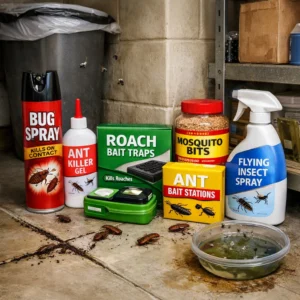
This level includes traps, baits, or low-toxicity products used carefully according to instructions.
It may help when:
- Pest activity is localized
- The source is visible and accessible
- No vulnerable occupants are affected
Misuse at this stage can cause pests to spread or become resistant.
Tier 3: Professional-grade pest solution
This level is required when infestations persist, spread, or pose health and structural risks.
Professional treatment includes inspection, source identification, targeted application, and prevention planning.
Safety and toxicity considerations
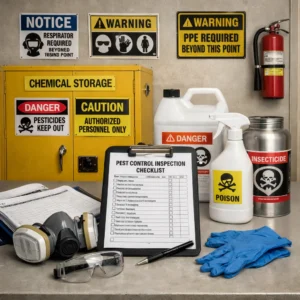
Safety is a critical part of any pest solution. Not all products are safe for all environments.
Key safety considerations include:
- Presence of children or pets
- Food preparation areas
- Ventilation quality
- Frequency of application
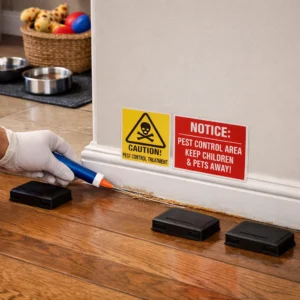
Pet- and child-safe options usually involve low-toxicity products, targeted application, and reduced exposure rather than stronger chemicals.
Proper application protocols matter more than product strength. Overuse or incorrect mixing increases risk without improving results.
Root-cause analysis: why pests appear and return
Lasting pest solutions address the cause, not just the pest.
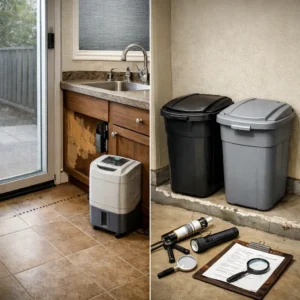
Common attractors include:
- Food residue and poor storage
- Moisture from leaks or condensation
- Clutter and unused storage
- Gaps in walls, doors, and utility lines
- Outdoor vegetation touching buildings
Simple perimeter checks such as sealing cracks, trimming plants, and improving drainage significantly reduce recurrence.
Understanding treatment cost considerations
The cost of a pest solution depends on multiple factors rather than a single flat rate.
Key cost factors include:
- Type of pest involved
- Size and layout of the affected area
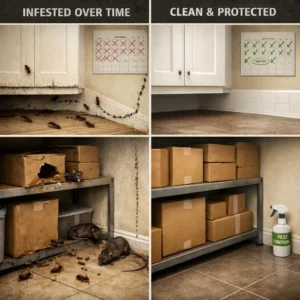
- Severity and duration of infestation
- Number of treatment visits required
- Safety and access complexity
DIY solutions may seem cheaper initially but often lead to higher long-term costs if pests return or spread. Professional treatment focuses on efficiency and prevention, which reduces repeat expenses.
Clear thresholds for when expert help is required
A pest solution should escalate to professional help when any of the following occur:
- Pests reappear after repeated DIY attempts
- Multiple rooms or areas are affected
- Structural damage is suspected
- Health symptoms appear
- The source cannot be located
Early professional intervention often prevents greater damage, higher costs, and prolonged disruption.
Conclusion
An effective pest solution is not about reacting quickly or using the strongest product available. It is about identifying the pest correctly, choosing the right level of action, protecting health and safety, addressing root causes, and knowing when expert help is necessary. By following a structured approach, pest problems can be resolved more efficiently and prevented from returning.